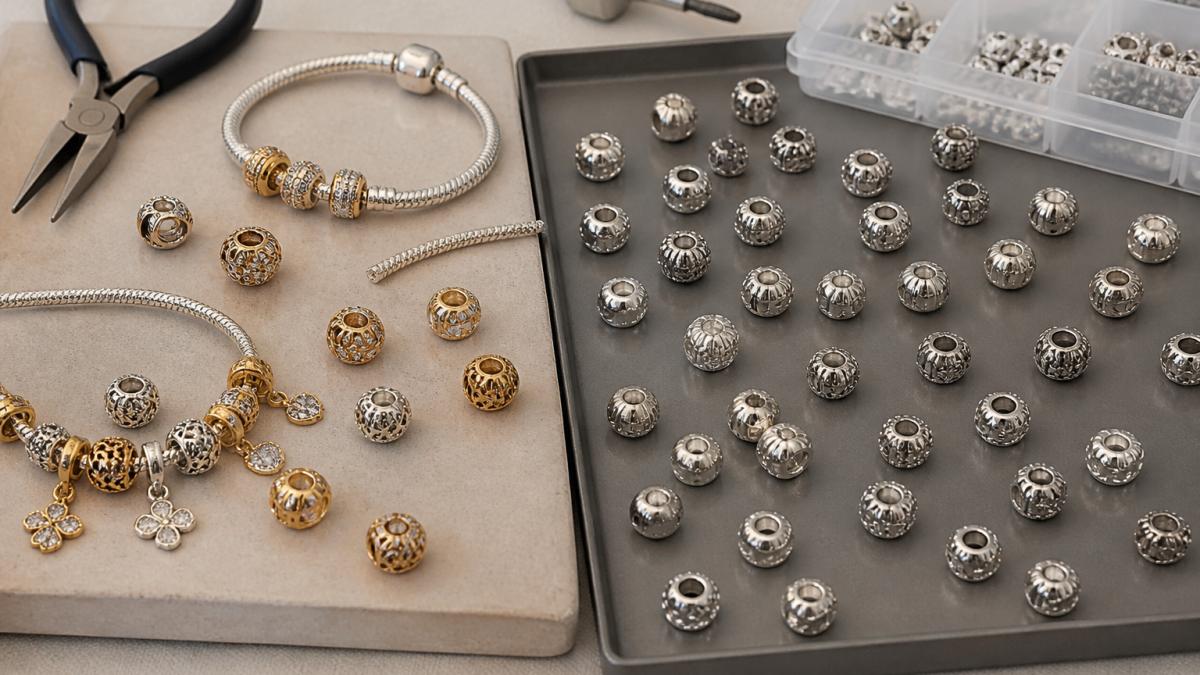
 blog
blog
Why Handmade Jewelry Beats Mass Production
Table of Contents
- Craftsmanship and Artisan Skill Set Handmade Jewelry Apart
- Quality Materials in Handmade Jewelry Construction
- Durability and Longevity of Handcrafted Pieces
- Uniqueness and Design Variation You Won't Find Elsewhere
- How to Tell If Jewelry Is Handmade
- The Real Benefits of Handmade Jewelry for Your Collection
- Handmade Jewelry Sustainability and Ethical Production
- When Mass-Produced Jewelry Makes Sense
- Frequently Asked Questions
Last Updated: October 5, 2026
Craftsmanship and Artisan Skill Set Handmade Jewelry Apart
Handmade jewelry better reflects the direct skill and intention of the artisan who created it, which is why handmade jewelry better serves those seeking genuine craftsmanship. When a jeweler crafts each piece by hand, they make countless small decisions that shape the final result.
The difference starts at the workbench. A handmade jewelry artisan uses traditional tools and techniques refined over years or decades. They feel the metal as they shape it. They adjust their approach based on how the material responds.
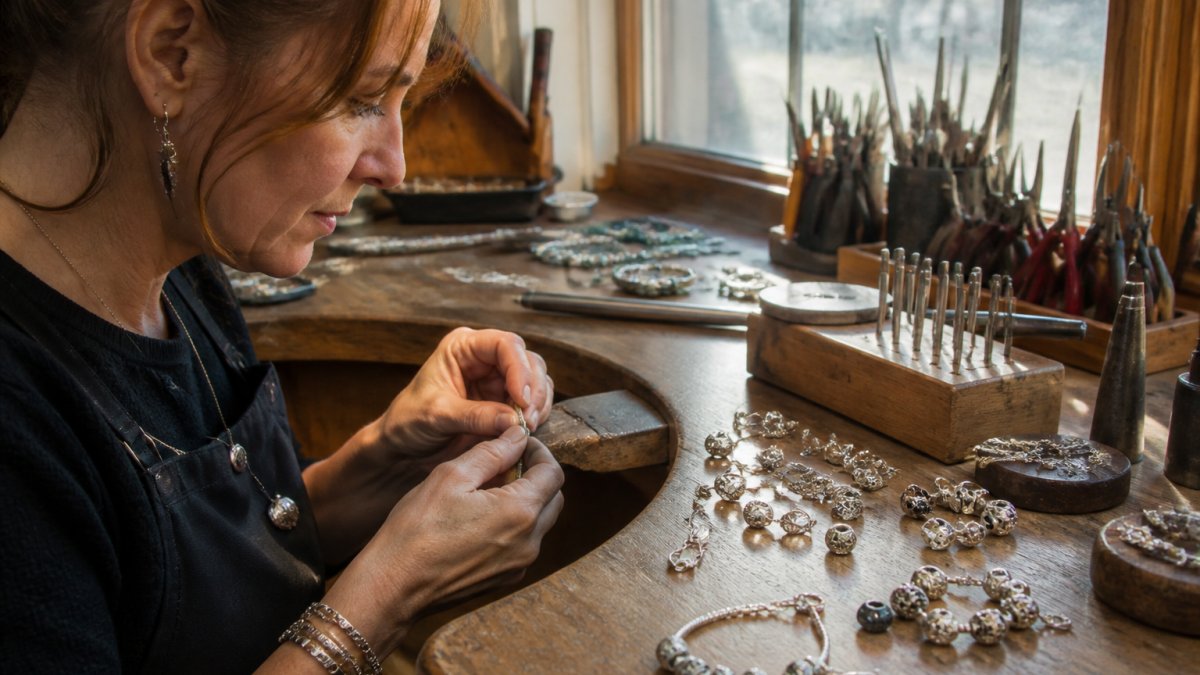
Mass-produced jewelry, by contrast, relies on machines to execute a single design thousands of times. The machine does exactly what it was programmed to do. There is no room for adjustment. There is no human judgment.
At Handmade Pandora-Style Charm Bracelets, we create each piece with attention to how it will actually feel and function when worn. Our artisans understand that a charm bracelet is not just a visual object. It is something you touch every day. It moves with your wrist. The weight matters. The way the charms hang matters.
Quality Materials in Handmade Jewelry Construction
Handmade jewelry is better because artisans who invest their time in crafting tend to invest in better materials too. When you spend hours shaping a single bracelet, using cheap materials feels wasteful. The economics work differently than in mass production.
Sterling silver is a common choice for handmade pieces. It is durable, it takes a beautiful finish, and it works well for detailed designs. Handmade artisans often source sterling silver from reputable suppliers who verify purity and quality. The sourcing process itself becomes part of the craft.
Mass-produced jewelry often uses lower-grade materials or plating that wears away quickly. The goal is to minimize cost per unit. When you are making ten thousand identical bracelets, material cost matters enormously. Handmade artisans make fewer pieces, so they can afford better stock.
The difference shows up over time. A handmade sterling silver bracelet with proper care can last decades. The metal does not degrade. The finish holds. If damage occurs, a skilled jeweler can often repair it.
Consider the components too. Handmade jewelry often features high-quality clasps, jump rings, and connectors. These small parts receive the same attention as the main design. In mass production, these components are often the first place corners get cut. A cheap clasp can break. A weak jump ring can fail.
Durability and Longevity of Handcrafted Pieces
Handmade jewelry is better when durability matters. A bracelet you wear daily needs to withstand constant movement, contact with skin, and exposure to the environment. Handcrafted pieces are built for this reality.
The construction methods used in handmade jewelry create stronger joints and connections. When an artisan solders two pieces of metal together, they create a bond that is literally fused at the molecular level. The joint is as strong as the metal itself.
The finish on handmade jewelry also tends to be more durable. Hand-finishing allows the artisan to build up protective layers gradually. They can catch and smooth rough spots. They can ensure the finish is even and complete. Machine finishing sometimes leaves microscopic flaws that become failure points.
Handmade charm bracelets are particularly well-suited to long-term wear because the design can be reinforced at stress points. An artisan knows which parts of a bracelet experience the most tension and can strengthen those areas. A machine follows a program.
The repairability of handmade jewelry is another durability advantage. If a handmade piece breaks, a skilled artisan can often fix it. The original maker, or another artisan familiar with the techniques, can restore the piece to working condition. Mass-produced jewelry is often designed to be disposable.
Uniqueness and Design Variation You Won't Find Elsewhere
Handmade jewelry is better for anyone who wants something truly unique. Mass production is built on uniformity. The entire point is to make thousands of identical items. Handmade jewelry is the opposite. Each piece is one of a kind.
This uniqueness comes from several sources. First, hand techniques introduce natural variation. Two artisans working from the same design will produce slightly different results. Even the same artisan making the same design twice will create pieces with subtle differences. These variations are not flaws. They are proof of handmade origin.
Second, handmade artisans can customize designs. An artisan can incorporate personal symbols, initials, or meaningful details into a bracelet. Mass production cannot accommodate this level of personalization without destroying its economic model.
Third, handmade artisans are more likely to create original designs. They are not constrained by what factory tooling can produce. They can experiment with unusual shapes, textures, and combinations. They can respond to trends faster because they do not need to retool a factory.
The emotional value of uniqueness matters too. When you wear a handmade piece, you know it is genuinely one of a kind. No one else has an identical bracelet. This creates a stronger connection to the piece. You are not wearing something that thousands of other people own.
How to Tell If Jewelry Is Handmade
Not all jewelry labeled "handmade" is actually handmade. Some producers use the term loosely. Learning to spot genuine handmade pieces helps you make informed choices.
Look at the joints and connections first. Handmade jewelry shows evidence of soldering or hand-forging. The joint will be clean but not perfectly uniform. Machine-made joints are often suspiciously perfect.
Examine the finish closely. Handmade pieces often have subtle texture or variation in the polish. The finish is not mirror-perfect everywhere. This is normal. It shows that a person spent time smoothing and polishing by hand.
Check the weight and feel. Handmade jewelry made from quality materials feels substantial. It has presence. Mass-produced pieces often feel lightweight or hollow.
Ask about the maker. Genuine artisans can tell you about their process. They can explain why they made specific choices. They can show you photos of their workspace or their hands at work.
Look for imperfections that suggest handwork. A tiny irregularity in a charm. A join that is not perfectly symmetrical. These are not defects. They are signatures of handmade origin. Mass production eliminates these variations completely.
Request documentation or certificates if available. Some artisans provide information about their process, materials, and techniques. This transparency is a sign of confidence in their work.
The Real Benefits of Handmade Jewelry for Your Collection
Handmade jewelry is better for building a collection that tells your story. Each piece can be chosen or customized to mark a moment, a relationship, or a milestone. Over time, your bracelet becomes a wearable autobiography.
The personalization options matter here. A design that incorporates your initials or a meaningful date. These customizations are difficult or impossible with mass-produced jewelry.
The craftsmanship also means your pieces will age gracefully. A handmade sterling silver bracelet can be worn for years and then polished or refinished. It does not degrade. It does not become embarrassing to wear. It becomes more meaningful as it accumulates the marks of your life.
Handmade jewelry often becomes heirloom-quality. Families pass down handmade pieces across generations. The craftsmanship and materials support this longevity. Mass-produced jewelry rarely survives long enough to become a family heirloom.
Supporting artisans is another real benefit. When you buy handmade jewelry, your money goes directly to a skilled craftsperson. You are supporting their livelihood and their craft. This creates a connection between maker and wearer that does not exist with mass production.
Handmade Jewelry Sustainability and Ethical Production
Handmade jewelry is better for the environment in several ways. Artisans typically produce much smaller quantities than factories. This means less waste, less energy consumption, and less overall environmental impact per piece.
The materials sourcing is often more transparent. Artisans who care about their craft tend to care about where their materials come from. They are more likely to source ethically and sustainably. They can trace their materials back to the source. Mass producers often cannot or will not provide this transparency.
Handmade jewelry also supports local economies. The money spent on an artisan-made piece stays in the local community. It supports one person or a small workshop, not a distant corporation. This has real environmental and social benefits.
The durability of handmade pieces means less replacement and less waste. When you buy a piece meant to last decades, you are not contributing to the throwaway culture that drives fast fashion jewelry. You are making a choice for longevity.
Artisans are also more likely to use recycled or reclaimed materials. A skilled craftsperson can work with existing metal, stones, or components. This reduces the need for new mining and processing.
When Mass-Produced Jewelry Makes Sense
Handmade jewelry is better for most situations, but mass production has legitimate advantages in specific contexts.
If you need multiple identical pieces for a large event, mass production is practical. Bridesmaids' gifts, corporate gifts, or party favors often require quantity and consistency.
Budget constraints sometimes make mass production the only option. If your budget is very limited, a mass-produced piece might be all you can afford. This is a reality, not a judgment.
If you want a specific branded design that only exists in mass production, that is your choice. Some people want a particular style that is only available from a specific manufacturer.
Fashion-forward designs that trend quickly might favor mass production. If you want the latest style and expect to replace it next season, the investment in handmade does not make sense.
Durability matters less for pieces you do not plan to wear regularly. If a bracelet is costume jewelry or a temporary accessory, the longevity advantage of handmade does not apply.
The key is matching the jewelry to your actual needs and values.
Choosing between handmade and mass-produced jewelry comes down to what matters to you. If you value craftsmanship, durability, uniqueness, and the story behind what you wear, handmade jewelry is the better choice.
Frequently Asked Questions
What makes handmade jewelry different from mass-produced jewelry?
Handmade jewelry is created by individual artisans using manual techniques and personal decisions about design, materials, and construction. Mass-produced pieces are manufactured in high volumes using machinery and standardized processes. Handmade pieces show individual variation, unique finishes, and human attention to detail that machine-made jewelry cannot replicate. Each handmade piece carries the maker's expertise and creative choices, resulting in jewelry with distinctive character and often superior durability.
Is handmade jewelry more sustainable?
Handmade jewelry typically has a lower environmental impact than mass production. Artisans often source materials more selectively, generate less waste through careful craftsmanship, and avoid the energy-intensive factory processes required for high-volume manufacturing. Small-batch production means fewer materials are wasted, and independent makers frequently use recycled or ethically sourced metals. Additionally, the durability and longevity of handmade pieces means they're worn longer and discarded less often, reducing overall consumption and environmental burden.
How can you tell if jewelry is handmade?
Look for signs of human craftsmanship: slight variations in symmetry, unique finishing marks, visible construction techniques like hand-soldered joints, and inconsistencies that indicate individual creation rather than machine precision. Handmade pieces often have maker's marks or signatures. Ask the artisan directly about their production methods, materials sourcing, and construction process. Examine the quality of detail work, the finish on hidden areas, and whether each piece shows individuality. Genuine handmade jewelry makers are transparent about their techniques and happy to explain how they create their work.
What are the main benefits of buying handmade jewelry?
Handmade jewelry offers superior craftsmanship, unique designs you won't find anywhere else, better durability due to careful construction, and direct support for independent artisans. You get personalized pieces that reflect individual creativity and skill. Handmade jewelry often uses higher-quality materials selected by the maker, provides customization options, and carries emotional value from knowing an artisan created it specifically. These pieces become meaningful keepsakes that tell your story and improve with age rather than deteriorating quickly like mass-produced alternatives.