 blog
blog
5 Best Charm Bracelet Materials for Everyday Wear
Table of Contents
- Why Material Matters for Everyday Charm Bracelets
- Sterling Silver: The Classic Choice for Charm Bracelets
- How to Clean a Sterling Silver Bracelet
- Gold and Gold-Plated Options
- Gold-Plated Charm Bracelet Care and Maintenance
- Best Metal for Everyday Jewelry: Stainless Steel and Beyond
- Comfort, Weight, and Lifestyle Fit
- Building Your Charm Bracelet Over Time
- Frequently Asked Questions
Last Updated: October 14, 2026
Why Material Matters for Everyday Charm Bracelets
The charm bracelet materials you choose determine how it looks after months of wear, whether it irritates your skin, and how much maintenance it needs. For a bracelet you wear daily, material is a practical choice that affects comfort, durability, and longevity.
At Handmade Pandora-Style Charm Bracelets, we focus on quality materials because our customers wear their bracelets constantly.
This guide breaks down charm bracelet materials that work for everyday wear, covering durability, care, and lifestyle fit.
Sterling Silver: The Classic Choice for Charm Bracelets
Sterling silver is a classic choice for charm bracelets because it balances beauty, durability, and affordability. A true sterling silver bracelet contains 92.5% silver mixed with other metals for strength.
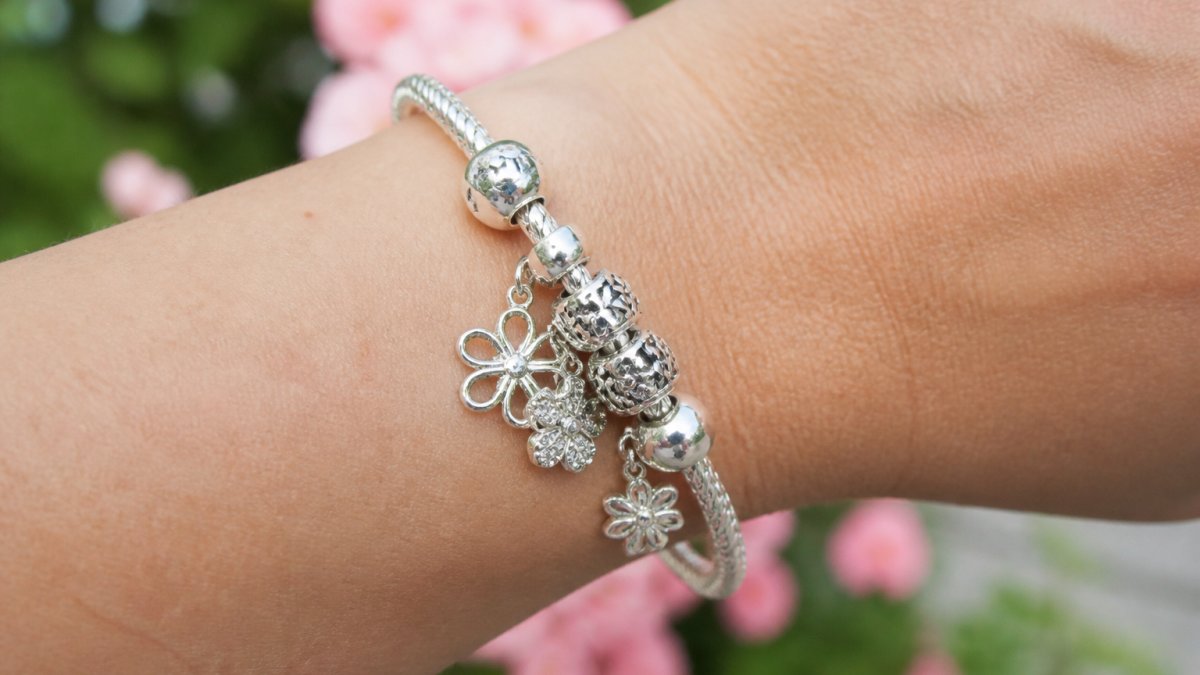
Durability and strength of 92.5% silver
Sterling silver holds up well to daily wear. The 7.5% alloy (usually copper) gives it the hardness to resist bending and breaking, so it can handle multiple charms without deforming.
The real question isn't durability, it's maintenance. Sterling silver tarnishes over time, especially in humid environments or with regular sweat exposure.
Tarnish resistance and polished finish
A polished sterling silver bracelet has a bright, reflective finish. Tarnish forms when silver reacts with sulfur compounds in the air or on your skin, but it's a removable surface layer, not damage.
Tarnish is preventable with basic habits. Wearing your bracelet regularly slows tarnish because body oils create a protective layer, and removing it at night and storing it dry helps too.
How to Clean a Sterling Silver Bracelet
Keeping sterling silver bright takes minimal effort if you do it regularly.
For light tarnish, rub the bracelet with a microfiber polishing cloth until the shine returns. This takes about two minutes.
For heavier tarnish, make a paste from baking soda and water, apply it with a soft toothbrush around the charms, then rinse with cool water and dry completely. Avoid harsh chemicals or abrasive scrubbers, which can scratch the surface.
Store your sterling silver bracelet in a cool, dry place; a tarnish-resistant pouch or sealed bag slows oxidation between wears. Worn daily and maintained monthly, it will stay bright for years.
Gold and Gold-Plated Options
Gold is the other classic choice for charm bracelets. Unlike sterling silver, it doesn't tarnish, making it lower-maintenance for everyday wear.
Solid gold vs. gold-plated charm bracelets
Solid gold bracelets are pure gold (or gold mixed with other metals for durability) throughout. They're expensive but virtually indestructible, since gold doesn't corrode, tarnish, or fade.
Gold-plated bracelets have a thin layer of gold over a base metal, usually sterling silver or brass. They cost far less than solid gold but deliver the same look, though the gold layer eventually wears through with daily wear.
For everyday wear, gold-plated works fine if you're gentle with it. The plating typically lasts 1-2 years before the base metal shows through at high-friction points like the clasp.
Gold-Plated Charm Bracelet Care and Maintenance
Gold-plated bracelets need different care than solid gold. The goal is protecting the plating from wear and moisture.
Remove your gold-plated bracelet before swimming, showering, or exercising. Water and sweat accelerate wear, and chlorine and saltwater are especially harsh.
Clean it gently with a soft, damp cloth. Avoid soaking it or using harsh soaps. Dry it immediately and completely.
Store it separately from other jewelry. Metal-on-metal contact scratches the plating. A small pouch or soft cloth works well.
Don't use commercial jewelry cleaners on gold-plated pieces. The chemicals can strip the plating. Stick with warm water and mild soap, applied with a soft cloth.
Best Metal for Everyday Jewelry: Stainless Steel and Beyond
Stainless steel is the no-fuss option for everyday charm bracelets. It resists rust, tarnish, and corrosion better than almost any other material, which is why it shows up in surgical instruments, watch cases, and marine hardware.
Stainless steel durability and low maintenance
Stainless steel bracelets handle moisture, sweat, and rough treatment without degrading. You can wear them swimming, exercising, or working without worry, and they don't tarnish, fade, or need special storage.
The trade-offs are real, though. Stainless steel feels colder and heavier than silver or gold, and it's harder to solder or resize if you plan to add charms over time. Some find it less elegant, though modern finishes can look just as refined.
Stainless steel is hypoallergenic for most people, but the grade matters. The 304 and 316 grades (used in food and medical applications) are the safest bets. Lower grades and some imported alloys can contain nickel or trace lead, a problem for sensitive skin, so treat an unstated grade as unknown.
How material affects charm weight, attachment, and capacity
This is the part that decides whether your bracelet is comfortable at charm ten or charm twenty.
Every charm adds weight and leverage. A sterling silver bracelet with a lobster clasp and soldered jump rings can comfortably carry a dozen or more charms before the chain stretches or the clasp slips. A gold-plated bracelet on a base-metal chain is lighter, but the plating wears fastest where charms rub against it, at the jump rings and clasp, so heavy loads shorten its life.
A practical rule: match the charm load to the material's strength. Sterling silver can carry a full bracelet. Gold-plated designs are happiest with a lighter, more curated charm count.
Beaded bracelets with glass and gemstone accents
Beaded charm bracelets mix metal with glass, gemstone, or crystal beads. The metal provides structure; the beads add color and personality.
Glass beads are durable and affordable, don't scratch easily, and come in endless colors. They're heavier than you'd expect, which can affect comfort if you use too many.
Gemstone beads (amethyst, rose quartz, aventurine) add natural beauty but are more fragile than glass and can chip against hard surfaces. Many are porous, so prolonged water exposure, showers, swimming, washing dishes, can dull the finish or affect the stone itself.
Crystal beads are cut for maximum sparkle but are delicate and can scratch, so store them away from harder jewelry. A soft pouch per bracelet is the simplest protection.
Skin sensitivity and nickel allergy considerations
Nickel allergies are common, roughly 10 to 15 percent of the population, and even small amounts can trigger itching, redness, or dermatitis. If you've reacted to cheap earrings before, assume you're in this group until proven otherwise.
Sterling silver is nickel-free when it's genuine 92.5 percent silver. Solid gold is typically nickel-free, though some alloys contain trace amounts, so ask about the alloy if you're highly sensitive. Gold-plated pieces are only as safe as the base metal underneath, once the plating wears through, the base metal touches your skin.
Stainless steel varies by grade: 304 and 316 are most often recommended for sensitive skin, while lower grades and unspecified alloys may contain nickel.
If you have sensitive skin, avoid brass and cheap base-metal alloys. Stick with sterling silver or solid gold, and remove the bracelet at night so your skin can recover.
Comfort, Weight, and Lifestyle Fit
The best charm bracelet material for you depends on how you live. Here's how the materials behave across the situations that come up in a normal week.
Water, sweat, and activity: a use-case guide
Showering and swimming. Solid gold and stainless steel (grades 304 and 316) are the two materials you can wear in the shower without thinking about it. Sterling silver survives water but tarnishes faster with repeated exposure to soap, chlorine, and humidity.
Exercise and heavy sweat. Stainless steel is the clear winner.
Work and daily chores. Sterling silver is comfortable and light enough to forget you are wearing it, which is why it remains the classic everyday choice. The catch is cleaning: dishes, cleaning products, and hand lotion all speed up tarnish.
Sleep. Any metal bracelet can catch on sheets and pull at the wrist overnight. Removing it before bed protects the bracelet and your skin, and slows tarnish on silver by keeping it out of humid air.
A ranked comparison for everyday wear
Here's how the materials stack up for daily use:
- Sterling silver (92.5%), A good balance of beauty, comfort, and durability. Lightweight, classic, strong enough for a full charm load, but requires monthly cleaning.
- Solid gold, Durable and low maintenance of the precious metals. Heaviest and the highest upfront investment, but it doesn't tarnish, corrode, or fade.
- Gold-plated, Offers a good look for a lower upfront spend, but the plating wears through at high-friction points within a year or two of daily wear. Best for people who remove their jewelry often.
Matching material to your routine
A simple way to decide: count how often you'd realistically take the bracelet off.
If the answer is "almost never", you shower, sleep, and exercise in it, choose solid gold, a material that tolerates neglect.
If the answer is "most nights, and I take it off before the pool", sterling silver is your best fit. It rewards a little care with years of shine and is the most comfortable metal for all-day wear.
If the answer is "I change jewelry with my outfit", gold-plated designs give you variety for less commitment, and their shorter lifespan matters less because you're not wearing them daily.
Building Your Charm Bracelet Over Time
The beauty of charm bracelets is that you build them gradually, starting with a bracelet and adding charms that matter to you.
Choose a base bracelet in a material you can live with long-term. Sterling silver and solid gold are timeless, and gold-plated is fine if you understand it will eventually need replating.
Add charms slowly, choosing pieces that represent moments or interests in your life. Each charm should feel intentional, not random, creating a bracelet with real meaning.
Your charm bracelet becomes a wearable story. The material you choose is the foundation that lets that story last.
Frequently Asked Questions
Is sterling silver good for everyday charm bracelets?
Yes, sterling silver is an excellent choice for everyday wear. At 92.5% pure silver, it offers a strong, durable base that resists tarnish when properly cared for. Sterling silver charm bracelets develop a beautiful patina over time and are comfortable for daily use. Regular cleaning keeps them looking polished and fresh.
What's the difference between solid gold and gold-plated charm bracelets?
Solid gold is pure metal throughout and lasts indefinitely with basic care, making it ideal for heirloom pieces. Gold-plated charm bracelets have a thin layer of gold over a base metal, offering the aesthetic at a lower cost but requiring more careful maintenance to prevent the plating from wearing away with frequent wear and exposure to water or sweat.
Can you wear a charm bracelet every day?
Yes, charm bracelets can be worn daily if made from durable materials like sterling silver or solid gold. Choose materials suited to your lifestyle: solid gold is most resilient for constant wear, while sterling silver and gold-plated options need regular cleaning and occasional breaks to maintain their appearance.
Which charm bracelet materials are best for sensitive skin?
Sterling silver and solid gold are the safest for sensitive skin because they resist nickel leaching. Avoid low-quality alloys or uncertain metal compositions. If you have a known nickel allergy, confirm your bracelet is nickel-free before purchasing, and test it on a small area of skin first to ensure compatibility.
Building a charm bracelet that lasts means choosing materials that match your lifestyle and committing to basic care. At Handmade Pandora-Style Charm Bracelets, we create bracelets using high-quality sterling silver and alternative components with white and gold plating, materials designed for everyday wear and long-term beauty. The right foundation lets your personal style shine for years to come.