 listicle
Charm Bracelet Alternatives for Minimalist Style
Table of Contents
- Why Charm Bracelet Alternatives Matter for Minimalist Style
- Simple Charm Bracelets That Work for Understated Elegance
- Minimalist Bracelets for Everyday Wear Beyond Charms
- Sterling Silver Charm Bracelets for Timeless Minimalism
- How to Style a Charm Bracelet for a Minimalist Look
- Materials, Durability, and Comfort for All-Day Wear
- Finding Your Perfect Minimalist Bracelet
- Frequently Asked Questions
Last Updated: October 12, 2026
Why Charm Bracelet Alternatives Matter for Minimalist Style
If you love personalized bracelets but find traditional charm designs visually noisy, you're not alone. The typical charm bracelet, dangling pieces, varying sizes, competing details, clashes with clean, understated elegance.
At Handmade Pandora-Style Charm Bracelets, we design pieces that honor charm bracelet tradition while respecting minimalist philosophy: fewer pieces, intentional design, timeless appeal.
Simple Charm Bracelets That Work for Understated Elegance
Not every charm bracelet has to be loud. Some embrace minimalism by limiting charm count, using uniform shapes, or spacing intentionally.
Geometric and Square-Charm Designs
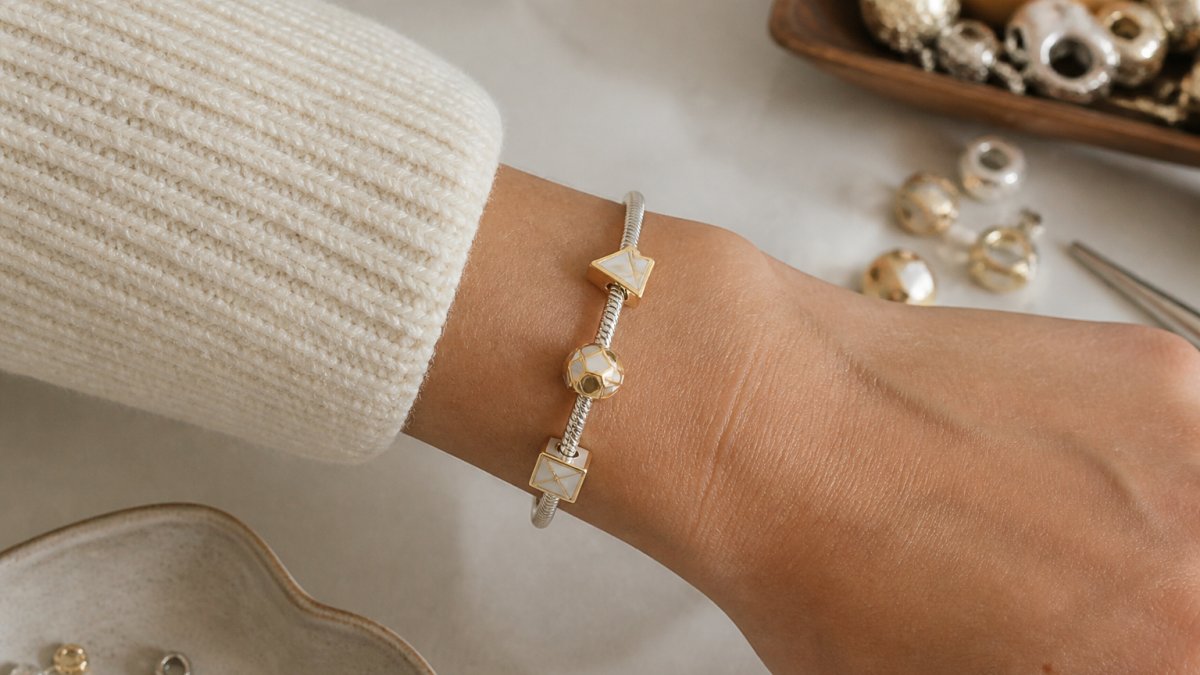
Geometric charms replace round or ornate shapes with clean lines and uniform proportions, creating an ordered, architectural feel where each charm sits flat and aligned.
Three or four evenly spaced square charms read as intentional rather than accidental, each can still carry meaning, but the presentation stays calm and controlled.
Choose consistent sizing and finishes, mixed metals or varied designs pull you back into visual clutter.
Curated DIY Charm Bars
DIY charm bars let you build a personalized bracelet with a set number of components, typically three to five rather than the ten-plus traditional charm bracelets accumulate.
The beauty is restraint by design: a defined limit forces selectivity, so the bracelet feels intentional because it literally is.
You typically choose between chain styles (solid, link, delicate) and a curated charm library. The result reads minimalist because you controlled the volume and spacing.
Minimalist Bracelets for Everyday Wear Beyond Charms
Sometimes the most elegant charm bracelet alternatives minimalist approach is stepping away from charms entirely, delivering personalization through material, design, and craftsmanship rather than dangling details.
Fine Chain and Link Designs
A delicate chain bracelet with minimal embellishment is the quiet luxury of minimalist jewelry.
The appeal is restraint: a fine chain works alone as a complete statement, or as a base for a single meaningful charm later.
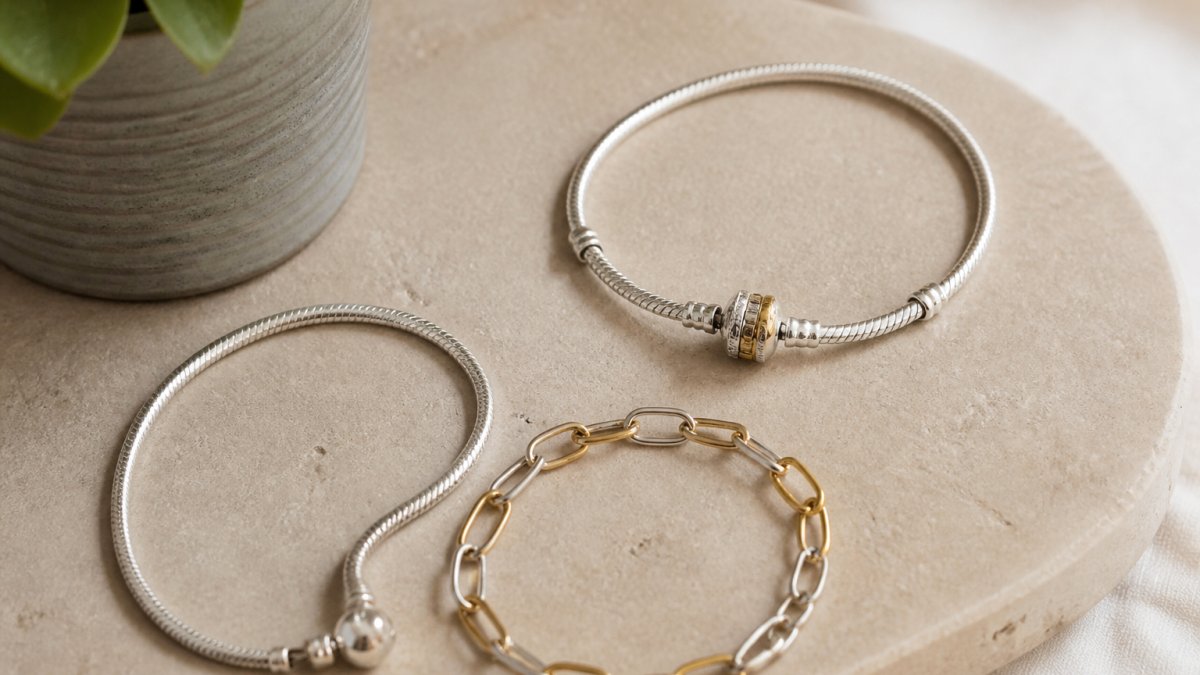
A minimalist collection highlights thin interlocking-link designs that exemplify this philosophy, focusing on link quality and construction precision rather than decoration quantity.
Hammered Cuff and Solid Band Options
A hammered or textured cuff brings visual interest through surface treatment rather than added components.
Solid band bracelets, smooth or textured, are the ultimate minimalist choice: complete on their own and working across any outfit, with craftsmanship as the focal point.
For a touch of personalization, some solid bands incorporate a single engraved initial, date, or symbol, meaning without clutter, personalizing through detail rather than volume.
Sterling Silver Charm Bracelets for Timeless Minimalism
Sterling silver is the material of choice for anyone serious about minimalist jewelry: its neutral, cool tone works with every color and style, competing with nothing.
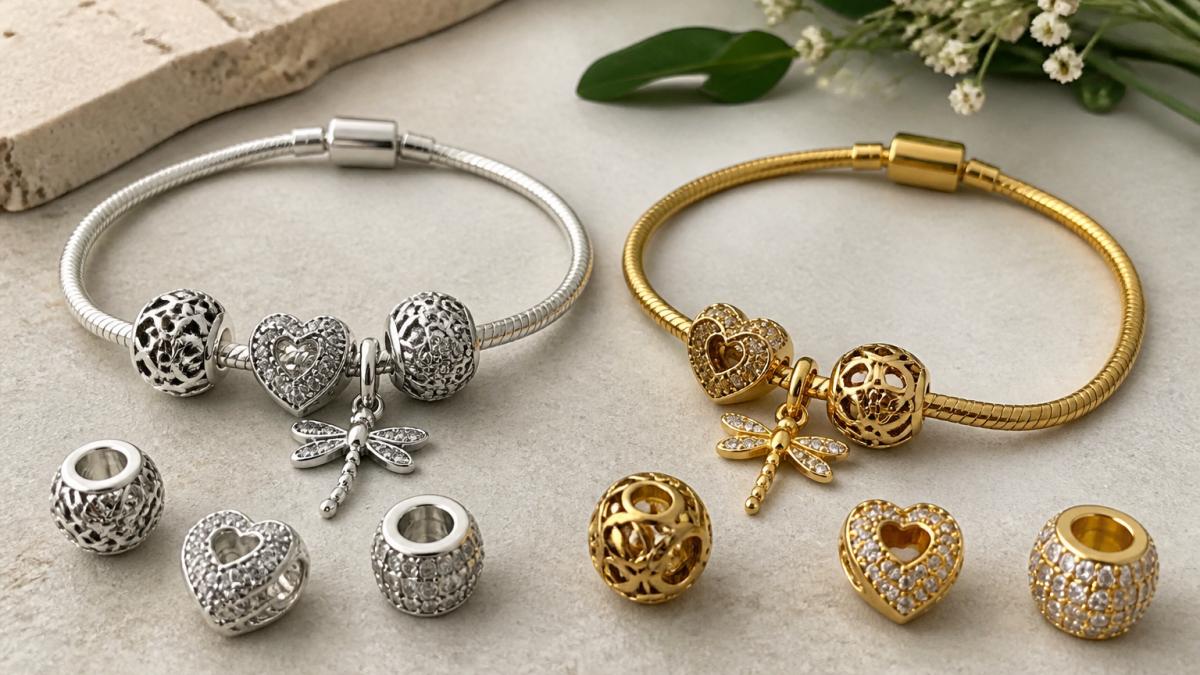
Handmade Pandora-Style Charm Bracelets specializes in sterling silver charm bracelets that embrace minimalist principles.
Sterling silver charm bracelets work for minimalist style because the material itself communicates quality and restraint, keeping the focus on the meaningful charms you choose and how intentionally they're arranged.
How to Style a Charm Bracelet for a Minimalist Look
Most minimalist styling advice stops at "wear less", not actionable. What actually keeps a bracelet pared-back is a set of proportions, spacing rules, and fit decisions you can apply every morning.
Start With a Charm Budget, Not a Charm Collection
A useful rule of thumb: cap visible components at three to five, including charms plus any decorative spacers or dangles. Past five, the eye stops reading individual pieces and starts reading texture, exactly the visual noise minimalist style avoids.
A second rule matters more than most people expect: keep charm sizes within roughly 20-30% of each other.
Spacing Is the Design
Distribute charms evenly rather than clustering them on one side, leaving at least one full link of bare chain between each. That negative space signals "minimalist", it's not empty, it's the design.
If your bracelet has a focal charm (engraved bar, birthstone, meaningful symbol), place it opposite the clasp to balance the closure's visual weight and keep the charm centered when your wrist is at rest.
Fit and Wrist Mechanics
Fit changes how a bracelet reads. One that slides freely looks casual and loose; one that sits just below the wrist bone looks deliberate and refined, usually the better default for minimalist styling.
To check fit: with your hand relaxed, you should slide one finger under the bracelet, but not two. If two fit easily, the bracelet rotates and charms drift to the underside of your wrist, defeating the point.
Layering Without Visual Clutter
Layering is where minimalist looks most often fall apart. Three rules keep it clean:
- One charm piece, maximum. If you're layering, the charm bracelet is the focal piece. Everything else should be a solid band, a fine chain, or a plain cuff.
- Two metal tones, maximum. Sterling silver plus one gold tone (white or yellow) reads as intentional. Three or more tones reads as a stack of unrelated pieces.
- Vary width, not texture. A 1.5mm chain next to a 4mm band creates contrast. Two 4mm bands with different textures creates competition.
Leave a small gap, roughly one bracelet's width, between pieces. Clustering makes the stack look heavy even when each piece is delicate.
Match the Bracelet to the Outfit, Not the Other Way Around
Minimalist bracelets work best when they echo, rather than compete with, what you're wearing:
- With a plain tee or knit: a single fine chain or a thin cuff is enough. Adding charms here is optional, not required.
- With a button-down or blazer: a slightly wider band or a single-charm bracelet adds a quiet focal point without breaking the line of the sleeve.
- With a dress or evening wear: one charm bracelet worn alone, with no other wrist jewelry, reads more elegant than a stack.
Materials, Durability, and Comfort for All-Day Wear
A minimalist bracelet only works if you actually wear it daily without thinking about it. That makes material choice the single most important decision, more than charm count or styling. Here's how the common options compare for everyday wear.
Sterling Silver: The Default for a Reason
Sterling silver is 92.5% pure silver alloyed with copper or another metal for strength, durable enough for daily wear while holding a bright, neutral tone that works with almost any outfit.
Two things to know about sterling silver in practice:
- It tarnishes. Tarnish is a natural reaction between silver and sulfur compounds in the air, in sweat, and in some cosmetics. It's not a defect. It develops faster in humid climates and slower in dry ones. Storing pieces in an airtight pouch or a tarnish-resistant jewelry box slows it down significantly.
- It's generally well-tolerated by sensitive skin. Sterling silver is a common choice for people who react to base-metal jewelry, though a small number of people are sensitive to the copper in the alloy. If you've reacted to silver before, a nickel-free sterling alloy is worth asking about.
Gold-Filled vs. Gold-Plated: A Real Difference
These terms get used interchangeably in marketing, but they behave very differently over time.
- Gold-filled means a thick layer of gold is mechanically bonded to a base metal (usually brass or copper). The gold layer is a meaningful fraction of the total weight, so it wears through slowly, often years of daily wear before any base metal shows.
- Gold-plated means a thin layer of gold is electroplated onto a base metal. It looks identical on day one, but the layer is much thinner and can wear through in months with daily wear, especially at contact points like the clasp and the underside of the wrist.
For a bracelet you plan to wear every day, gold-filled is the more durable choice. Gold-plated is fine for occasional wear or for pieces you rotate.
Water, Sweat, and Everyday Exposure
No plated or filled jewelry is truly waterproof long term. A few practical rules:
- Remove before swimming, showering, or heavy exercise. Chlorine, salt water, and sweat all accelerate wear on plated and filled pieces.
- Put jewelry on last. Perfume, lotion, and hairspray are common causes of dulling and tarnish. Let them dry before putting the bracelet on.
- Wipe after wear. A soft dry cloth removes oils and sweat before they sit on the metal overnight.
Sterling silver handles water exposure better than plated pieces, but it will still tarnish faster with frequent moisture. A quick wipe-down is the single highest-return habit.
Nickel Sensitivity and Skin Reactions
Nickel is the most common metal allergen and is present in many base metals under plating. If you've had itching, redness, or a rash from cheap jewelry, you're likely nickel-sensitive.
A few things that help:
- Look for nickel-free or hypoallergenic labeling on sterling silver and gold-filled pieces.
- Be cautious with plated pieces, once the plating wears through, the base metal is exposed to your skin.
- Watch the clasp and any soldered points. These are often where base metal is most exposed.
If a bracelet irritates your skin, stop wearing it and let the area settle before trying a different metal. A dermatologist can confirm a nickel allergy if you're unsure.
Comfort: Weight, Width, and Clasp Quality
Comfort determines whether a bracelet becomes a daily piece or a drawer piece.
- Weight: A minimalist bracelet should feel almost weightless. If you notice it during typing or driving, it's too heavy for all-day wear.
- Width: Fine chains (under 3mm) and slim bands (under 5mm) are the most comfortable for most people. Wider cuffs can be comfortable but need a good fit to avoid pressure points.
- Clasp: A lobster clasp with a smooth, rounded edge is the most reliable for daily wear. Avoid clasps with sharp edges or loose hinges, they catch on sleeves and can open unexpectedly.
A Quick Material Decision Guide
- Want the most durable daily-wear option? Sterling silver.
- Want a gold tone that lasts? Gold-filled, not gold-plated.
- Have sensitive skin? Nickel-free sterling silver or nickel-free gold-filled.
Finding Your Perfect Minimalist Bracelet
The right minimalist charm bracelet alternative depends on your style, budget, and how much personalization you want.
Drawn to traditional charm bracelets but want restraint?
Prefer stepping away from charms entirely?
Consider your lifestyle too. If you wear jewelry constantly, durability matters more than novelty, sterling silver and gold-filled pieces last.
Finally, think about meaning.
Frequently Asked Questions
What are the best alternatives to a traditional charm bracelet?
The best charm bracelet alternatives depend on your style preference. Fine chain bracelets, hammered cuffs, and solid band designs offer understated elegance without the bulk of multiple charms. Simple geometric charm designs and curated DIY charm bars let you keep a few meaningful pieces without visual clutter. Sterling silver options provide timeless durability and work with any outfit, making them ideal for everyday minimalist wear.
Can a charm bracelet look minimalist?
Yes. A minimalist charm bracelet uses fewer, carefully selected pieces instead of filling the band with many charms. Geometric or square-charm designs create a more uniform, refined look. Curated DIY charm bars let you choose just the details that matter to you, keeping the design intentional and uncluttered. The key is selecting quality over quantity and spacing charms thoughtfully along the band.
How do you style a charm bracelet for everyday wear?
Wear your minimalist charm bracelet alone on one wrist for a clean look, or layer it with a simple chain bracelet on the other wrist. Keep your charms meaningful and limited in number, three to five pieces maximum. Choose neutral metals like sterling silver that coordinate with your wardrobe. Pair the bracelet with understated outfits to let it be a subtle accent rather than a bold statement.
What materials work well for minimalist charm bracelets?
Sterling silver is the best choice for minimalist charm bracelets because it's durable, versatile, and works with any outfit. Gold-filled metals offer a warmer tone while maintaining longevity. Avoid overly decorative plating or mixed metals, which can feel busy. Solid materials without excessive embellishment keep the design clean and intentional, supporting the minimalist aesthetic.