 how-to
Prevent Charm Bracelet Tarnishing in Humid Weather
Last Updated: October 23, 2026
Quick Summary
To prevent charm bracelet tarnishing in humid weather, store your bracelet in an airtight container with silica gel packets and anti-tarnish strips that absorb moisture and neutralize sulfur-containing air. This airtight storage cuts tarnishing risk by up to 80% because it prevents the humidity and pollutants that cause oxidation from reaching your jewelry.
- Store charm bracelets in airtight containers with 2-3 silica gel packets and replace packets every 3-6 months when saturated.
- Use anti-tarnish strips alongside silica gel to capture sulfur and reactive gases, replacing them every 6-12 months depending on humidity.
- Never store jewelry in bathrooms where shower steam creates constant moisture exposure that accelerates tarnishing.
- In summer months with high humidity, increase silica gel packets by 50% and check your bracelet weekly for early signs of tarnish.
- Match cleaning method to tarnish stage: use gentle galvanic cleaning for haze and film, targeted polish for corrosion, then immediately return to dry storage.
Table of Contents
- Why Humidity Causes Charm Bracelet Tarnishing
- Best Jewelry Storage for Humidity: Step-by-Step Setup
- How to Clean Sterling Silver Charms After Humidity Exposure
- Preventative Maintenance Routines for Charm Bracelets
- Travel-Specific Humidity Protection for Your Bracelets
- Material-Specific Humidity Reactions and Solutions
- Frequently Asked Questions
Why Humidity Causes Charm Bracelet Tarnishing
Learning how to prevent charm bracelet tarnishing starts with understanding that humidity is the enemy of sterling silver.
Sulfur in humid air bonds with silver to create silver sulfide, the gray or black coating you see as tarnish.
Tarnish is a surface reaction, not damage, but left untreated, corrosion deepens and becomes harder to reverse, so prevention beats cleanup.
Best Jewelry Storage for Humidity: Step-by-Step Setup
Creating the right storage environment is the most effective way to prevent charm bracelet tarnishing before it starts. Follow these four steps to build a humidity-resistant jewelry box setup.
Step 1: Choose an Airtight Container
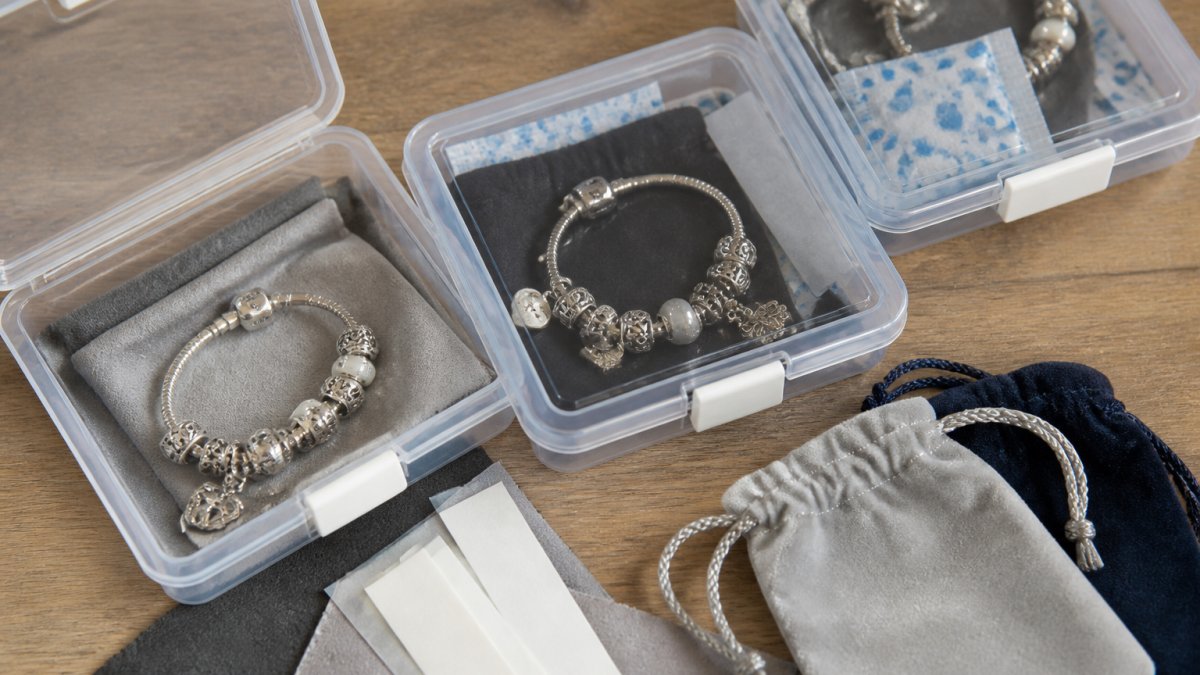
Start with an airtight container. In a humid climate it's non-negotiable: it seals out the moisture and air pollutants that cause oxidation.
Your options:
- Plastic storage boxes with tight-sealing lids
- Glass jars with rubber gaskets
- Acrylic jewelry organizers with locking compartments
The material matters less than the seal. Close the lid and check for air gaps, if air escapes, moisture will too.
Step 2: Add Silica Gel Desiccants
Add silica gel packets inside your container. They absorb moisture from the trapped air and keep the environment dry.
Why silica gel works: it's a non-toxic desiccant that doesn't off-gas harmful chemicals Ganoksin Project jewelry care guidance.
How to use it:
- Place 2-3 packets in a small pouch or loose in the container
- Replace packets every 3-6 months (they absorb moisture until saturated)
- Check for color indicators, many packets change color when full
One packet per 100 cubic inches of storage space is a good rule of thumb. If your box is large, use more packets.
Step 3: Use Anti-Tarnish Strips for Jewelry Boxes
Anti-tarnish strips are small tabs infused with chemical absorbers that neutralize pollutants in the air Lisa Jewelry US recommendations for jewelry storage. They work alongside silica gel to create a multi-layer defense.
They capture sulfur and other reactive gases before they reach your jewelry, especially useful when storing multiple pieces in one box.
How to place them:
- Lay strips flat on the bottom or sides of your container
- Keep them away from direct contact with jewelry (they can leave residue)
- Replace every 6-12 months depending on humidity levels
Step 4: Organize with Soft Pouches
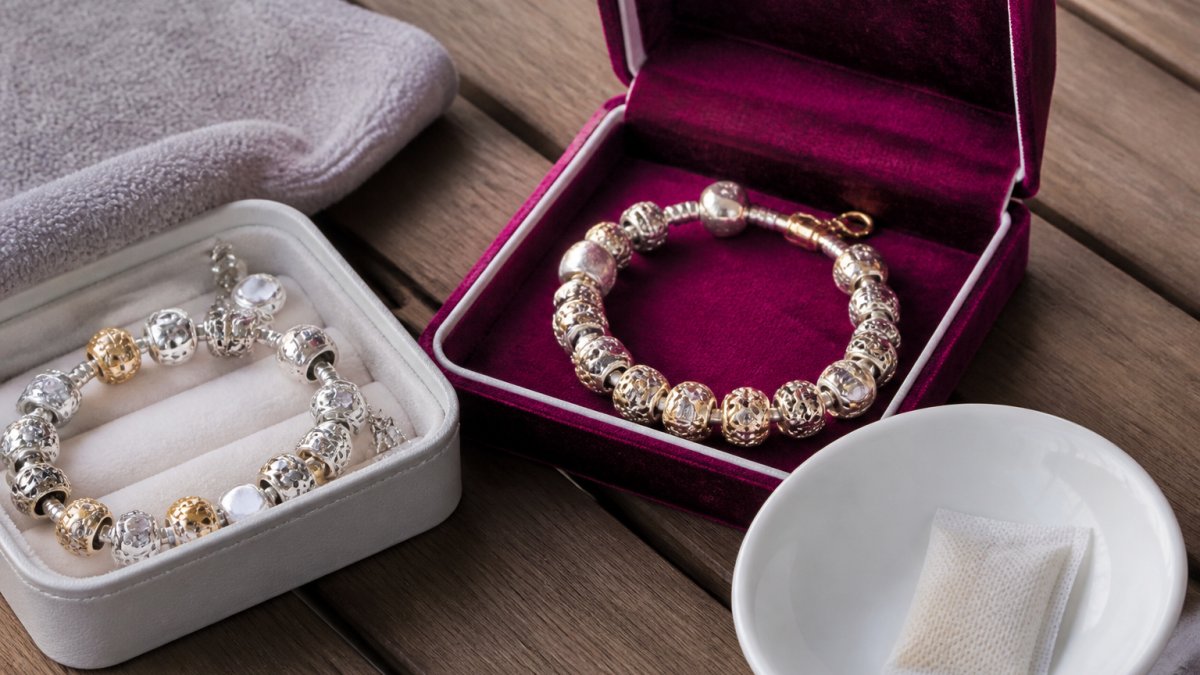
The final layer is soft pouches, protecting each charm bracelet from rubbing against others and from direct contact with desiccants.
Use pouches made from:
- Microfiber cloth (soft, non-abrasive)
- Cotton flannel (breathable, protective)
- Velvet or felt (gentle on delicate pieces)
Avoid plastic pouches that trap moisture. Your goal is breathable protection, not waterproofing.
Stack pouches in the airtight container with silica gel packets between layers to keep air moving and moisture controlled.
How to Clean Sterling Silver Charms After Humidity Exposure
Wiping with a cloth handles a faint haze, but humidity-induced tarnish is layered: surface film, then silver sulfide, then pitting around joints and clasps. Use this triage-first protocol instead of scrubbing everything the same way.
Step 1: Diagnose the stage before you touch it
Hold the bracelet under bright, angled light and inspect charm faces, jump rings, connectors, and clasp spring. Match what you see to a stage:
- Stage 1, Haze: a uniform pale yellow or light gray film. The metal still reflects clearly. This is surface film, not yet sulfide.
- Stage 2, Sulfide film: distinct brown, purple, or black patches that follow the contours of the metal. Reflection is dulled but the surface is smooth.
- Stage 3, Corrosion: rough, pitted, or chalky texture, often concentrated in crevices, around soldered joints, and inside the clasp. Black residue comes off on a cloth.
Stage determines method: an abrasive paste on Stage 1 removes silver you didn't need to lose, while soap alone won't fix Stage 3.
Step 2: Stage 1 and Stage 2, the non-abrasive wash
For haze and sulfide film, start gentle:
- Line a small bowl with aluminum foil, shiny side up.
- Add one tablespoon of baking soda and one teaspoon of salt per cup of hot (not boiling) water.
- Place the bracelet on the foil, fully submerged, for 3-5 minutes.
This aluminum-baking-soda method forms a mild galvanic couple: sulfide transfers from the silver to the foil, removing tarnish without abrasion. It's safe for sterling silver and, as a short dip of no more than a couple of minutes, for gold-plated components.
For a single stubborn patch on plain sterling, a baking-soda-and-water paste applied with a soft cloth in light circles is acceptable, but keep it off gold plating, off gemstones, and off any antiqued or oxidized finishes, which the paste will strip.
Step 3: Stage 3, targeted, not aggressive
Pitted corrosion needs a different approach, skip steel wool and heavy-abrasive polishes, which widen the pits. Instead:
- Apply a small amount of a silver-specific tarnish remover (the impregnated-cloth type, not a liquid dip) to the affected area only.
- Work it in with a soft-bristled brush, a clean, retired toothbrush works well, paying attention to the clasp interior and the gaps around jump rings.
- Wipe residue away with a microfiber cloth, then wash with mild dish soap and water to remove any polish residue.
If pitting is deep enough that the metal feels rough after cleaning, the piece needs a jeweler's polishing wheel, that is a professional step, not a home one.
Check out One-of-a-Kind customer bracelets →
Step 4: Stabilize immediately after cleaning
This is the step almost every guide skips. Freshly cleaned silver is more reactive than tarnished silver because the sulfide layer slowing further reaction is gone, so don't leave a cleaned bracelet on a dresser overnight.
- Dry it completely, moisture trapped in a clasp is the number-one cause of re-tarnish within a week.
- Return it straight to the airtight container with fresh silica gel and an anti-tarnish strip.
- Do not wear it for at least a few hours after cleaning if you are in a humid environment; let the storage system do its work first.
What to do if tarnish keeps coming back
If a piece re-tarnishes within days of cleaning, the problem is storage, not cleaning. Check whether the seal is actually airtight, whether the silica gel is saturated, and whether the piece sits near a humidity source (bathroom, kitchen, laundry area).
Preventative Maintenance Routines for Charm Bracelets
Consistent routines keep your bracelet tarnish-free without constant effort.
Monthly checks:
- Open your storage container and inspect each piece
- Look for early signs of tarnish (slight dulling or discoloration)
- Wipe pieces with a microfiber cloth if needed
Quarterly maintenance:
- Replace silica gel packets if they show color changes
- Refresh anti-tarnish strips
- Reorganize pouches to ensure even air circulation
Seasonal adjustments:
- In summer (higher humidity), increase silica gel packets by 50%
- In winter, reduce frequency slightly but maintain the system
- After humidity spikes (heavy rain, flooding), open your container to check for moisture
Wearing vs. storage: One contrarian insight: in low-humidity environments, regular wear can slow tarnishing because skin friction keeps the surface polished. In humid climates, wear it less and store it more.
| Season | Humidity Level | Silica Gel Packets | Check Frequency | Replace Strips |
|---|---|---|---|---|
| Spring | Moderate | 2-3 | Every 2 weeks | Every 6 months |
| Summer | High | 4-5 | Weekly | Every 3 months |
| Fall | Moderate | 2-3 | Every 2 weeks | Every 6 months |
| Winter | Low | 1-2 | Monthly | Every 9 months |
Travel-Specific Humidity Protection for Your Bracelets
Traveling to humid destinations requires extra precautions. Airports, hotels, and tropical climates all spike humidity exposure.
Before you travel:
- Clean your bracelet completely
- Store it in a zip-seal bag with a small silica gel packet
- Use a travel-sized anti-tarnish pouch if available
During travel:
- Keep your bracelet in your carry-on, not checked luggage (pressure and temperature swings damage silver)
- Store it in a dry hotel safe, not the bathroom
- Avoid wearing it in pools, hot tubs, or ocean water
After you return:
- Inspect your bracelet for any tarnish
- Clean it if needed
- Replace the silica gel packet you traveled with
The zip-seal bag method is the simplest travel solution: compact, effective, and nearly free.
Material-Specific Humidity Reactions and Solutions
Most humidity guides treat all jewelry as one material, the biggest gap in the category. A sterling silver charm, a gold-plated connector, and a base-metal charm on the same bracelet react to humid air differently, and the protection that saves one can damage another.
Sterling silver (925): the fast reactor
Sterling silver is 92.5% silver and 7.5% other metals, usually copper. Fine silver (999) tarnishes more slowly but is too soft for most charm bracelets.
In practice, sterling silver needs the most protection and benefits most from airtight storage with silica gel and an anti-tarnish strip. It's also most worth cleaning promptly, since copper sulfide deepens faster than silver sulfide alone.
Gold-plated components: the wear problem, not the tarnish problem
Gold plating doesn't tarnish like silver, gold itself is inert. The risk is wear: humidity softens the boundary between plating and base metal, and moisture plus friction can make plating flake or dull at high-contact points like clasps and charm loops.
In practice, gold-plated pieces need moisture control more than polishing. Keep them dry, avoid abrasive cloths and pastes that strip plating, and store them separately from sterling silver so cleaning residue doesn't transfer.
Mixed-metal bracelets: the hidden galvanic issue
When sterling silver and gold-plated components share a bracelet, a small galvanic effect occurs: two dissimilar metals in contact, with moisture as the electrolyte, accelerate corrosion at contact points. That's why mixed-metal bracelets often tarnish first at jump rings and connectors, not charm faces.
In practice, separate metals in storage when you can; when you can't, use individual soft pouches inside the same airtight container so pieces don't touch. Keep it dry and check connectors first during monthly inspections, that's where the reaction shows up earliest.
Base-metal and costume components: the fastest reactor
Brass, copper alloy, and plated base-metal charms tarnish faster than sterling silver and can transfer residue to neighboring pieces, next to silver, a base-metal piece is effectively a tarnish source.
In practice, store base-metal pieces in their own pouch, ideally a separate container, and never let them share an anti-tarnish strip with sterling silver, the strip gets consumed faster and the silver loses protection.
Quick comparison
| Material | Primary humidity reaction | Speed | Best protection | Cleaning approach |
|---|---|---|---|---|
| Sterling silver (925) | Copper-driven sulfide film, brown to black | Fast | Airtight container + silica gel + anti-tarnish strip | Galvanic foil method, then targeted polish |
| Gold-plated | Plating wear and dulling at contact points; base metal tarnish once worn through | Moderate | Dry storage, separate pouch, no abrasives | Dry microfiber wipe only |
| Mixed metal | Galvanic corrosion at contact points | Fast at joints | Individual pouches, dry container | Clean each metal by its own method |
| Base metal / costume | Rapid oxidation, residue transfer | Fastest | Separate container, own anti-tarnish strip | Gentle wash, replace if pitted |
The takeaway for charm bracelets
The practical rule: identify the most vulnerable material and protect to that standard. Any sterling silver means treating the whole piece as silver, airtight, dry, with desiccant.
If you're building a custom charm bracelet with high-quality sterling silver and gold-plated components, Custom Orders Welcome allows you to specify exactly which materials and finishes work best for your climate and storage setup.
Frequently Asked Questions
Why does humidity cause my charm bracelet to tarnish faster?
Moisture in humid air reacts with sterling silver, accelerating oxidation. Sulfur in humid air is the primary chemical culprit that causes tarnish to develop. When your bracelet is exposed to atmospheric moisture without proper protection, the silver surface undergoes a surface reaction that darkens the metal. Airtight storage and desiccants like silica gel block this moisture exposure, slowing tarnish formation significantly.
What's the best way to store charm bracelets to prevent oxidation?
Store your bracelet in an airtight container with silica gel desiccants and anti-tarnish strips. Use individual zip-seal bags or a jewelry box with compartments, and place a silica gel packet inside to absorb atmospheric moisture. Anti-tarnish strips or tabs infused with chemical absorbers neutralize pollutants in the storage environment. This multi-layer approach, airtight seal, desiccant, and chemical absorbers, provides maximum protection against humidity-induced corrosion.
How often should I clean my handmade charm bracelet?
In humid climates, inspect your bracelet monthly for early tarnish signs. Clean it every 3-6 months with a soft polishing cloth and mild soap and water, or use a specialized silver cleaner if tarnish appears. Regular cleaning removes air pollutants and skin oils that accelerate oxidation. If you wear your bracelet daily, clean it more frequently; if stored most of the time, quarterly cleaning usually suffices.
Can humidity damage white and gold-plated jewelry?
Yes. Humidity accelerates corrosion on plated surfaces, especially if the protective coating is thin or worn. Moisture and sulfur in humid air can penetrate the plating and oxidize the base metal underneath. Store plated charms separately from unplated sterling silver in airtight containers with silica gel to extend their longevity. Avoid wearing plated pieces in the shower or in high-humidity environments when possible.